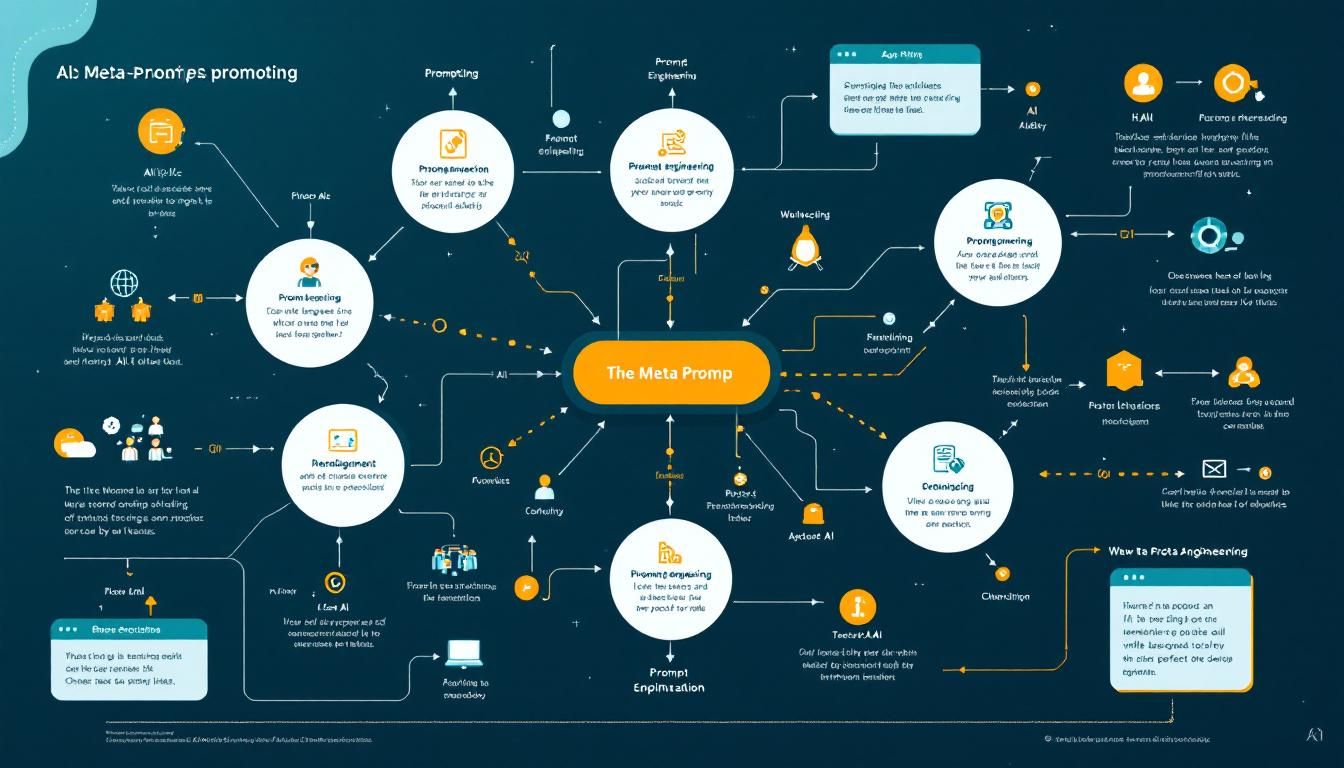
The Meta-Prompt That Fixes Your Terrible AI Instructions
Humans are notoriously bad at prompting AI systems — but what if you could get AI to write perfect prompts for itself? This recursive technique transforms vague requests into precision-engineered instructions that deliver 10x better results.
promptingprompt engineeringAI optimizationChatGPT
Your AI prompts probably suck. That's not a personal attack — it's just statistics. Most people treat ChatGPT, Claude, or Gemini like a slightly smarter Google search, typing half-formed thoughts and hoping for the best.
But here's the counterintuitive solution: stop writing prompts yourself. Instead, get AI to write them for you.
Why This Matters
The gap between mediocre and exceptional AI results isn't about having access to better models — it's about prompt quality. A well-crafted prompt can mean the difference between generic corporate-speak and genuinely useful output.
The problem is that prompt engineering requires understanding how large language models process information, structure reasoning, and interpret instructions. Most humans wing it with natural language and wonder why their results are inconsistent.
The secret isn't becoming a better prompt writer — it's delegating prompt writing to something that understands AI better than you do.
This approach, called meta-prompting or recursive prompting, leverages the AI's understanding of its own architecture to create optimized instructions. Think of it as having an AI translator that converts your messy human thoughts into the precise language that gets results.
The Master Prompt Strategy
The concept is elegantly simple: create a specialized AI assistant whose only job is writing perfect prompts for other AI interactions. This "prompt engineer" understands context, specificity, role definition, and output formatting in ways that produce consistently better results.
Here's how it works in practice:
Step 1: Set Up Your Prompt Factory
In ChatGPT, create a dedicated project called "Master Prompt" or "Prompt Engineer." The key is using this as a system prompt — the foundational instructions that shape how the AI behaves throughout the entire conversation.
Navigate to your project settings and add custom instructions. This is where you'll paste your meta-prompt that transforms the AI into a specialized prompt-writing assistant.
Step 2: Feed It Your Raw Ideas
Instead of struggling to craft the perfect prompt yourself, simply tell your prompt engineer what you're trying to accomplish. Use natural language:
- "I need help writing a newsletter"
- "Create a marketing campaign for my product"
- "Analyze this data and find insights"
- "Write code for a specific function"
The meta-prompt takes your vague intention and reverse-engineers the optimal prompt structure, including:
- Role definition ("Act as an expert newsletter writer...")
- Context setting (relevant background information)
- Specific constraints (length, tone, format requirements)
- Output formatting (bullet points, numbered lists, specific sections)
- Success criteria (what constitutes a good response)
Step 3: Deploy the Optimized Prompt
Copy the generated prompt and use it in a fresh conversation or different AI tool. The results will be dramatically more focused, detailed, and useful than your original attempt.
This isn't about being lazy — it's about leveraging AI's systematic understanding of what makes prompts work to consistently get better outputs.
Why Meta-Prompting Works
The effectiveness comes down to three key advantages:
Systematic Structure: AI models respond well to consistent patterns. A meta-prompt ensures every generated prompt includes the essential elements that trigger high-quality responses: role, context, task, constraints, and format.
Domain Expertise: The AI has been trained on countless examples of effective prompts across different domains. It knows what works for creative writing versus data analysis versus code generation.
Iterative Improvement: You can refine your meta-prompt based on results, creating a feedback loop that improves over time.
Real-World Applications
This technique shines across different use cases:
- Content Creation: Transform "write a blog post" into detailed briefs with target audience, key points, tone requirements, and SEO considerations
- Data Analysis: Convert "analyze this spreadsheet" into structured requests that specify analysis methods, visualization preferences, and insight priorities
- Code Generation: Upgrade "write a function" to include language specifications, error handling requirements, documentation standards, and testing criteria
- Creative Projects: Evolve "help with marketing" into comprehensive campaign briefs with audience personas, messaging frameworks, and success metrics
Building Your Meta-Prompt Arsenal
While the basic concept is universal, you can create specialized versions for different domains:
The Analyzer
Optimized for breaking down complex problems, data interpretation, and research tasks. Focuses on methodology, evidence requirements, and structured reasoning.
The Creator
Designed for content generation, creative writing, and ideation. Emphasizes audience, voice, style guidelines, and creative constraints.
The Strategist
Built for business planning, decision-making, and strategic thinking. Incorporates stakeholder considerations, success metrics, and risk assessment.
The Technical Expert
Specialized for code, technical documentation, and system design. Includes language specifications, best practices, and integration requirements.
The goal isn't to replace your thinking — it's to amplify your intentions with the systematic approach that AI models understand best.
Each specialized meta-prompt becomes a tool in your arsenal, ready to generate optimized prompts for specific types of work.
The Bottom Line
Meta-prompting represents a fundamental shift in how we interact with AI systems. Instead of struggling to become better prompt writers, we delegate that task to the system that understands prompt optimization better than any human could. This recursive approach — using AI to improve AI interactions — consistently produces more focused, detailed, and useful outputs across every domain from creative writing to technical analysis. The future of AI productivity isn't about memorizing prompt formulas; it's about building systems that automatically generate the optimal instructions for whatever you're trying to accomplish.
Try This Now
- 1Create a dedicated ChatGPT project called 'Master Prompt' with custom system instructions
- 2Test the meta-prompt approach with 3 different types of tasks you regularly perform
- 3Build specialized versions of your meta-prompt for your most common AI use cases
- 4Compare results between your original prompts and meta-prompt generated versions to measure improvement
How many Orkos does this deserve?
Rate this tutorial