Meta-Architects: Why the AI Future Belongs to System Replacers, Not Optimizers
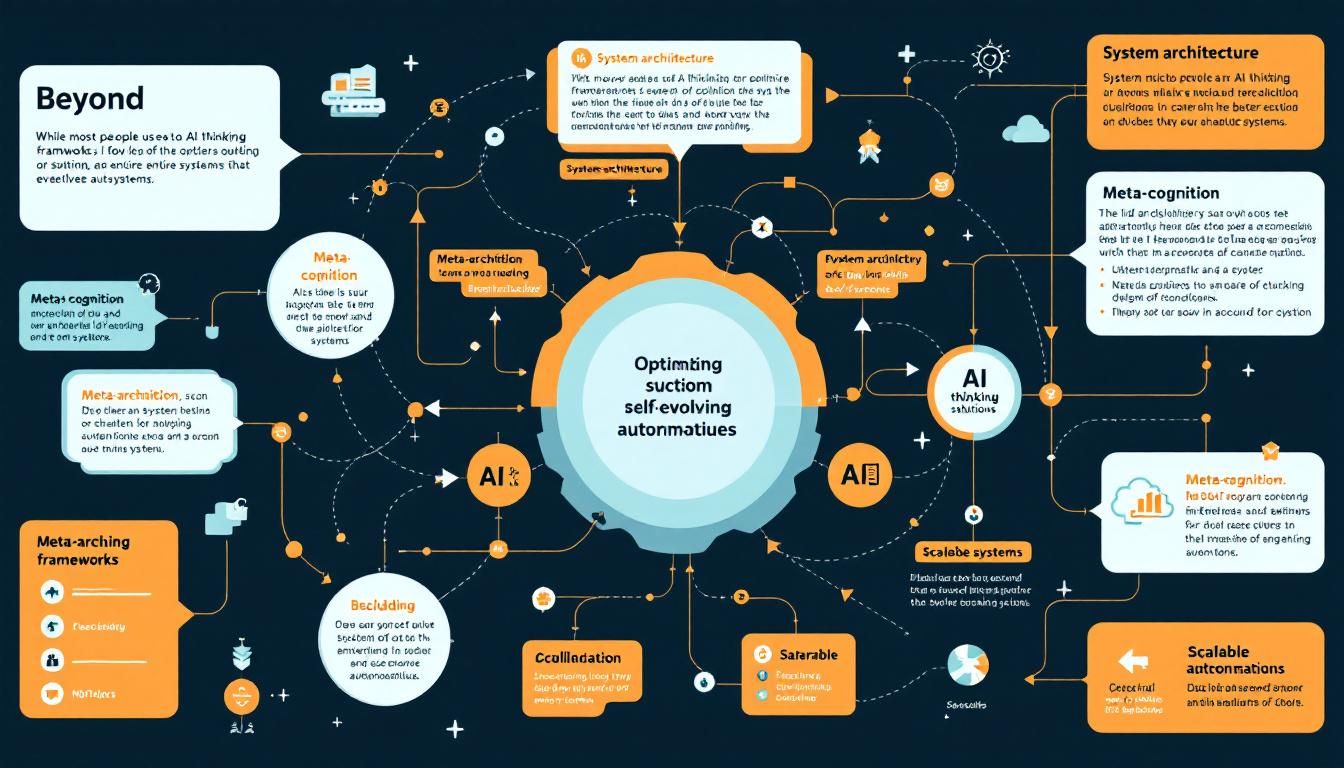
While most professionals use AI to optimize existing processes, meta-architects design entirely new systems that evolve autonomously using the scientific method. The key difference: they don't just use AI as a tool—they architect with AI to create self-improving infrastructure that replaces entire structures rather than fixing them.
system architectureAI thinking frameworksmeta-architecturescalable system designAI-driven automationChatGPT
The most successful AI practitioners aren't the ones building the best chatbots or optimizing the most workflows. They're the ones who've stopped thinking about AI as a tool and started using it as a design partner for systems that didn't exist before.
Why This Matters: The Three Types of AI Thinkers
Here's the uncomfortable truth about AI adoption in 2024: most organizations are still playing optimization theater. They're using ChatGPT to write better emails, Claude to summarize documents, or Midjourney to generate graphics faster. Nothing wrong with that—except they're competing in yesterday's game while a small group is designing tomorrow's playing field.
The AI landscape has quietly stratified into three distinct approaches:
- Meta Experts: Use AI for knowledge work and analysis
- Meta Engineers: Build solutions and products with AI
- Meta Architects: Design evolving systems that replace existing structures entirely
Most professionals hover between the first two categories. They're optimizing what exists or building new versions of familiar things. But meta-architects? They're asking a fundamentally different question.
Instead of "How can AI make this better?", meta-architects ask "What system should exist here instead?"
A meta architect doesn't just optimize or execute systems—they design entire scalable systems that evolve over time. The distinction isn't just philosophical; it determines whether you're using AI or architecting with it.
The Replacement Mindset: When Breaking Points Become Opportunities
The clearest way to identify a meta-architect is how they respond to system failures. When something breaks:
- Meta experts tweak and adjust parameters
- Meta engineers rebuild with better components
- Meta architects replace the entire structure
This isn't just a philosophical difference—it's a strategic one. In rapidly evolving AI landscapes, the biggest competitive advantages come from designing systems that can evolve autonomously, not from perfecting static solutions.
Consider content creation. Most people are still optimizing their writing process with AI assistance—using Jasper for blog posts or Copy.ai for social media. Meta-architects build media ecosystems where AI manages, scales, and repurposes content automatically across platforms. The difference isn't just efficiency; it's structural.
The Scientific Method Applied to System Design
Real meta-architects don't just intuitively design better systems. They apply rigorous methodology:
- Observation: What patterns emerge from current AI interactions?
- Hypothesis: What system architecture could handle these patterns autonomously?
- Experiment: Build minimal viable systems to test assumptions
- Analysis: Measure adaptation and scaling capabilities
- Conclusion: Deploy or iterate based on evolutionary potential
This approach transforms AI from a productivity booster into a design collaborator for systems that literally couldn't exist without it. The key insight: you're not just learning with AI—you're designing systems with AI that adapt, iterate, and scale independently.
Meta-architects realize they weren't just learning with AI—they were designing systems with AI. Systems that adapt, iterate, and scale.
From Ideas to Infrastructure: Building Self-Evolving Systems
Here's where theory meets practice. A meta-architect might start with something as simple as idea management and end up with infrastructure that reshapes how knowledge flows through an organization.
Traditional approach: Write ideas in Notion, maybe use AI to help organize or expand them.
Meta-architect approach: Design a system where:
- Ideas get automatically captured and contextualized
- AI identifies patterns and connections across ideas
- Content gets generated and distributed across multiple platforms
- The system learns from engagement and adjusts future ideation
- Within 24 hours, conversational AI can discuss your ideas as if they're established knowledge
The difference isn't just scale—it's that the system becomes smarter over time without manual optimization. As one practitioner puts it: "I write ideas down, then publish them across platforms, and the very next day, you can ask ChatGPT about it."
Real-World Implementation Example
Let's break down what this actually looks like in practice:
Step 1: Capture Architecture
- Voice notes automatically transcribed and tagged
- Otter.ai or Whisper for initial processing
- GPT-4 for contextual analysis and categorization
Step 2: Evolution Engine
- AI identifies connections between disparate ideas
- Automatic hypothesis generation about emerging patterns
- Cross-platform content generation based on idea clusters
Step 3: Distribution Intelligence
- Buffer or Hootsuite integration for platform-specific optimization
- AI-driven A/B testing across different formats and audiences
- Engagement data feeds back into idea prioritization
Step 4: Knowledge Integration
- Custom GPT trained on your evolving idea corpus
- Pinecone or Weaviate for vector-based knowledge retrieval
- System becomes consultable expert on your thinking within days
The magic isn't in any single component—it's in designing architecture where each piece makes the others more intelligent.
The Infrastructure Question: What Problems Should Exist?
Here's the meta-architect's secret weapon: they don't just solve problems, they design the infrastructure that determines what problems are worth solving in the first place.
While others are asking "How can AI help us do X better?", meta-architects are asking "Should X exist at all, or should we design Y instead?"
This shift in thinking becomes crucial because:
- Meta experts can solve your current problems efficiently
- Meta engineers can build solutions to problems you identify
- Meta architects design the infrastructure that decides what problems even exist
In the AI era, this distinction matters more than technical skills. The biggest opportunities aren't in optimizing existing workflows—they're in designing entirely new categories of systems that become possible when AI handles the complexity.
The future belongs to people who know when a system must be replaced, not just when it needs to be improved.
The Evolution Imperative
Static solutions, no matter how well-built, become liabilities in fast-moving AI landscapes. Meta-architects design for evolutionary pressure from day one:
- Systems that get better with more data
- Architecture that adapts to new AI capabilities automatically
- Infrastructure that identifies its own optimization opportunities
- Frameworks that can integrate breakthrough technologies without rebuilding
This isn't future-proofing in the traditional sense—it's designing systems that become more valuable as the underlying technology improves.
The Bottom Line: Architect or Be Architected
The choice facing every AI practitioner isn't really about which tools to use or which workflows to optimize. It's about whether you're designing the systems that will define your industry's next decade, or whether you're optimizing within systems someone else designed.
Meta-architects understand that in rapidly evolving technological landscapes, the biggest competitive advantage isn't having the best tools—it's designing the best systems for tools that don't exist yet. They're not just using AI; they're architecting with it to create infrastructure that makes entirely new categories of problems solvable.
The fundamental question isn't whether you can use ChatGPT effectively or build impressive AI-powered features. The question is: are you optimizing what already exists, or are you designing what comes next?
Because in the AI era, optimization and building won't be enough. The future belongs to people who architect with AI, not just use it. And in five years, the difference between those two approaches won't just be competitive—it'll be existential.
Try This Now
- 1Identify whether you're currently a meta expert, meta engineer, or meta architect in your AI usage
- 2Apply the scientific method (observation, hypothesis, experiment, analysis, conclusion) to design an evolving AI system
- 3Build a simple self-improving system that captures, processes, and redistributes your ideas automatically
- 4Shift from asking 'How can AI make this better?' to 'What system should exist here instead?'
- 5Design systems that adapt and scale independently rather than require manual optimization
How many Orkos does this deserve?
Rate this tutorial